
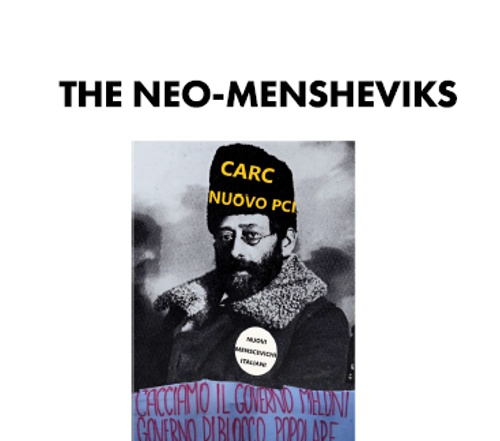
CONCERNING THE CARC-nPCI LINE OF THE “PEOPLE’S BLOC GOVERNMENT”.
On October 15, the CARC published an article on their website entitled “Interview with Pietro Vangeli, National Secretary of the CARC Party”. This article, concisely, sets out the CARC’s general political line for the “people’s bloc government” and its alleged connection with the question of socialist revolution in Italy. Militants who want to build the Communist Party to promote and lead the proletarian revolution must read, study, and know how to criticize this article.
Read the 64-page A5 political pamphlet exposing and denouncing the revisionist positions of the Italian CARC–nPCI group.
Table of Contents
- The CARC and the self-interview of October 5
- Reaction and revolution: the two opposing paths of the development of the Italian crisis
- The deception of the “third way” that paves the way for fascism
- The extreme left and its centrist role
- The question of the “blueprint of revolution”
- The blueprint of “revolution” of centrist opportunism
- The thesis of the “objective engine” of the revolution of centrist opportunism
- The blueprint of revolution of today’s centrists and the positions of the opportunist groups of the 1970s
- The formulas for an alternative revolutionary government of the opportunist forces of the 1970s
- The CARC-nPCI line of the “people’s bloc government”
10.1. The theory of levers
10.2. The assumptions and main pillars of the CARC-nPCI’s “people’s bloc government” line
10.3. The CARC-nPCI line for the people’s bloc government during the pandemic
10.4. The line on building the people’s bloc in the CARC’s article of January 2022
10.5. The theory of forcing the bourgeoisie to swallow the “people’s bloc government”
11. The question of crisis-collapse due to the “absolute overproduction of capital” as the objective engine of the revolution
12. The CARC-nPCI: from crisis-collapse to the revisionist theories of the FAUS, the state, the party, and the revolution
13. Conclusions
 nuovaegemonia.com